Liwa在AI交付现场 — AI delivery field notes | Case 001
Someone runs the ads. Someone follows up with customers. How much time disappears into screenshots, duplicate data entry, and chasing updates between them?
I'm Liwa, based in Shenzhen. I build AI applications and improve business workflows. My experience includes restaurant SaaS, overseas payment products, and operations automation, as well as working with marketing and sales teams to bring AI into their everyday work.
In August 2026, we were helping a team that served restaurant businesses in the Philippines review its marketing and sales process.
The team was trying to acquire customers through Facebook. Restaurant owners could see a post or an ad, send an inquiry through Messenger, and then speak with a local salesperson who would understand their needs and arrange a product demo.
The difficulty became clear when it was time to review performance. Which inquiries had led to a demo? Which conversations had gone no further? Who should the next round of advertising target? The information available to marketing lagged behind what sales was actually doing.
After contacting a customer, a salesperson recorded the details in the lead sheet. The same information then had to be entered in another sheet for marketing analysis. Repeated entry made it difficult to keep the two sets of records consistent.
“I have no data and no feedback. I'm completely guessing. I have no direction.”
The marketing lead's words at the time, translated from Chinese.
More inquiries from advertising would not make this problem disappear. Without a clear view of what happened next, the people producing the content had little to work with when deciding what to change.
We went back through the work at each step of a customer's journey into the business.
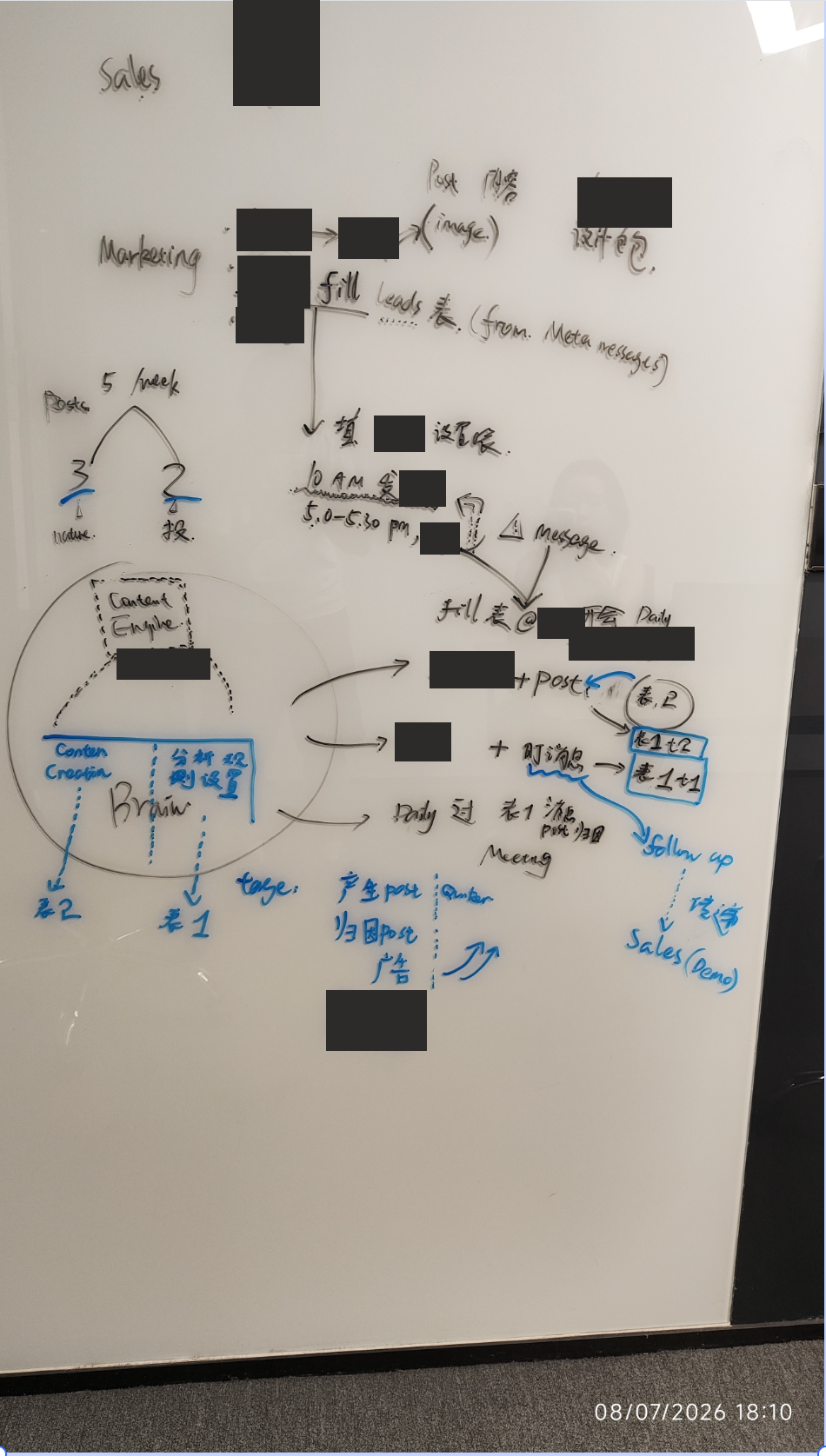
Mapping the workflow with the team at the client site. This is a photograph from the project, with sensitive details redacted.
The business process covered by the work:
Content and advertising → Customer inquiries → Follow-up and demos → Handoff after a sale
01 · Give customers a reason to come to you
First, a little context from before I joined.
There are two common approaches to finding customers. Outbound means reaching out through calls, emails, or visits. Inbound uses channels such as content and advertising to help people with a relevant need find the business themselves.
This company sold restaurant ordering software and hardware, similar to Keruyun in China. Restaurants paid software subscriptions and hardware fees. Most customers had previously come through outbound work: the local sales team visited restaurants to introduce the product and find prospective customers.
Yes, door-to-door sales in 2026.
The team had already tried online marketing. Initially, people selected topics, wrote copy, and assembled assets manually, one post at a time. Production was slow, and the results were not encouraging.
Marketing colleagues then began using Claude to help write content. There was still considerable manual work between choosing a direction, preparing the content, adding it to a calendar, and handing it to someone to publish.
When I joined, I wanted to make that process more systematic. Using product information, the different situations restaurant owners faced, and the team's existing marketing experience, we built an AI Brain to help shape content strategy, find topics, and draft posts and video scripts.
The team would review, produce, and publish the content. Restaurant owners who saw it on Facebook could send an inquiry directly.
The same software needs a different story for different owners.
Someone preparing to open a restaurant wants to know whether equipment, installation, and training will be ready in time. An operating restaurant may still be entering delivery orders into its POS system one by one. An owner who has replaced an older system may want to know who will help when something goes wrong.
A list of features alone gives those people little reason to stop scrolling.
The AI Brain used Claude and marketing skills. Its output needed to go beyond a topic suggestion. It had to explain the opening line, what to film, what to put on screen, and what viewers could do next. That gave the team something it could take into production.
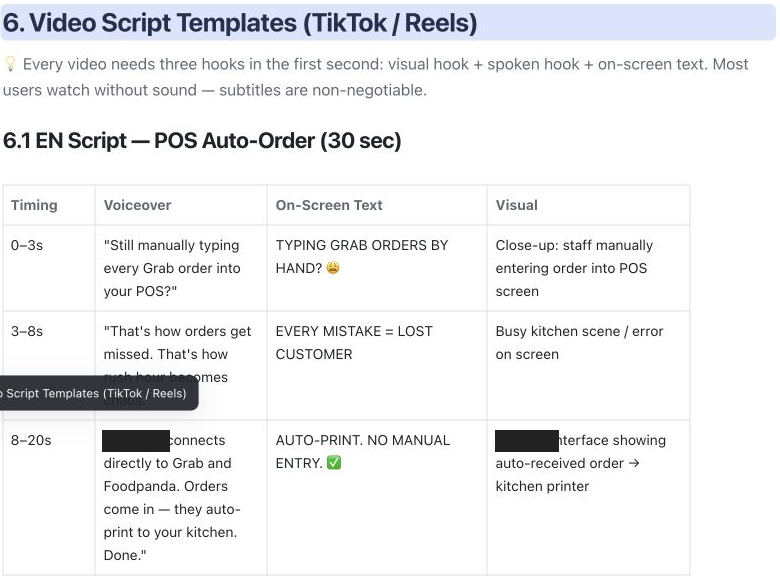
A script excerpt built around a restaurant's operating problem, with narration, captions, and shot directions. This is project material with identifying details redacted.
The script opens by asking restaurant owners whether they still enter delivery orders manually. The first shot shows an employee entering an order, followed by a product demonstration. The person producing the video can see what to film without having to reconstruct the intent behind the topic.
AI helped with the first draft. After review, the content entered the calendar and went to colleagues for production, publishing, and advertising. People still had to decide which claims were appropriate and which wording could mislead a customer.
Content calendar · Planning excerpt
Opening an F&B outlet? 5 things to confirm before your first day
Carousel (5 slides)
Slide 1: Opening an F&B outlet? | 5 things to confirm before day one.
Slide 2: 01 Check your BIR setup.
Slide 3: 02 Match the hardware to your service.
Slide 4: 03 Installation + 04 Training | Who sets it up—and trains your team?
Slide 5: 05 Know who to call after launch. | Send us your outlet details.
CTA: Send us your outlet details
This planned post comes from a later version of the project's archived content calendar.
One of the topics the team prepared around restaurant owners' concerns was: Does the POS system you use today still fit your restaurant?
The material continued to be used in advertising. One ad launched in September had generated 147 new Messenger conversations in Meta's records as of November 2. Ad spend was approximately ₱34,919, averaging about ₱238 per new conversation.
Once advertising brings people in, the next question is whether those inquiries reach the colleagues responsible for following up.
02 · Stop making colleagues move the same message again
The original handoff involved a familiar routine: take a screenshot of a customer's Facebook message, send it to the work group, and let another colleague pick it up. Someone still had to organize the information for the spreadsheet.
Each new detail from the customer produced another message in the group. Whoever took over had to piece those messages together to understand whom to contact and what to discuss.
We kept the team's existing Feishu Base and connected Messenger to Feishu, with a bot in the work group. When a customer sent an inquiry, the message first went into a raw-message table, preserving the timestamp, sender, and original wording.
At the same time, the bot sent a message card to the work group. The colleague handling follow-up could open the card and return to the original conversation in Meta Inbox to clarify requirements and arrange a demo.
Marketing and sales could continue working in familiar tools. Inquiries no longer depended on someone taking a screenshot, forwarding it, and typing it into a sheet, and a record remained available for the next person.
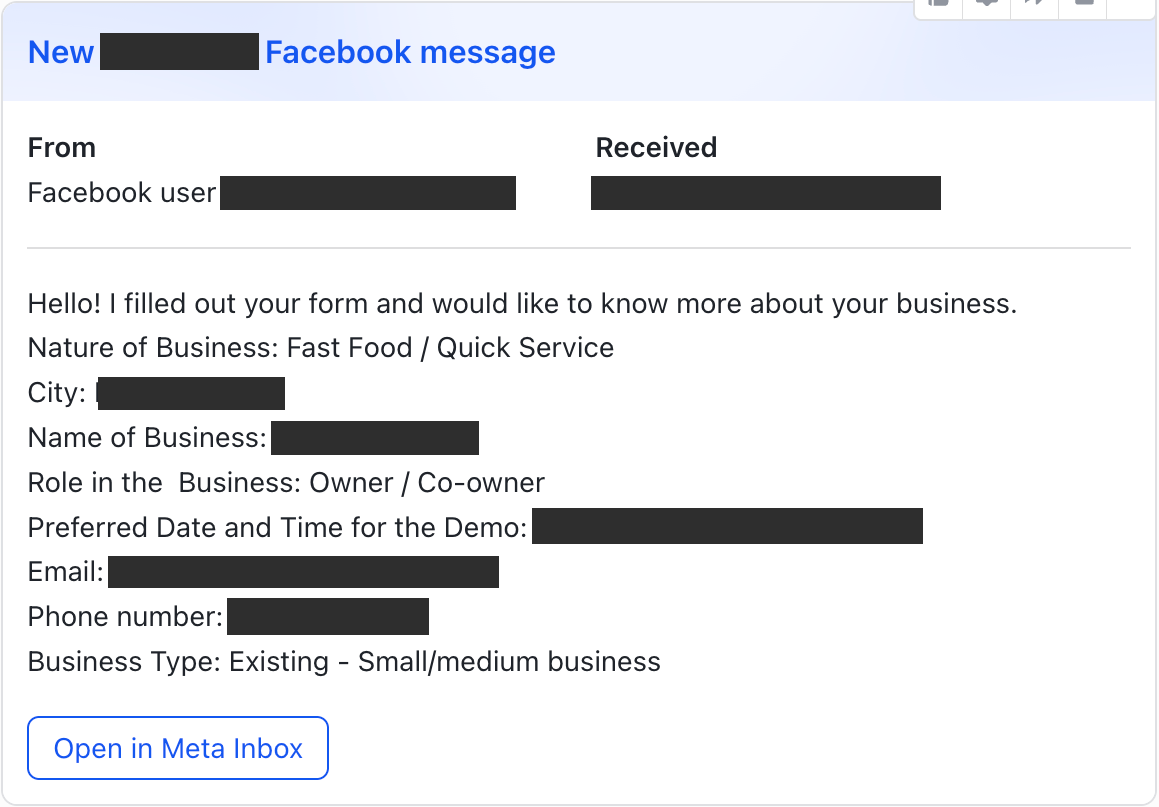
A real inquiry card received by the Feishu group during the project, showing the message and a button to open Meta Inbox. Identifying details are redacted.
Next came customer identity. Several messages from the same person needed to belong to the same customer record. Information already known, such as the city or restaurant details, should not need to be recreated because that person sent another inquiry.
The system also needed to organize messages into information sales could use. Answers submitted through the form first entered the Raw Messages table in Feishu. It retained who sent the information, when it arrived, and what they said, so sales could always return to the original wording.
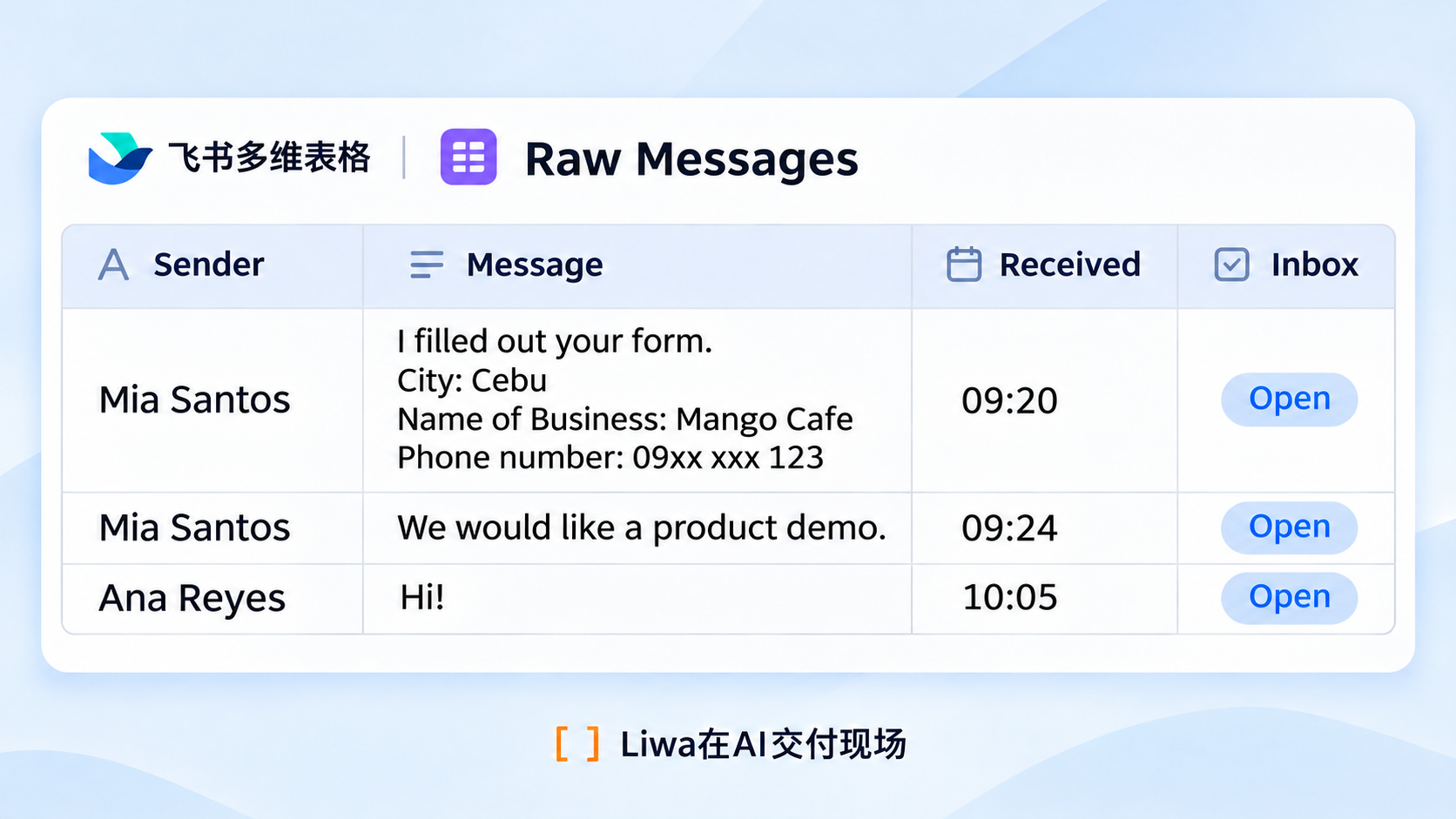
Customer names and conversations in this illustration are fictional. It shows how incoming messages are stored in the raw table.
For structured form responses, we defined extraction rules that put the city, restaurant name, business type, opening stage, contact details, and preferred demo time into their corresponding fields. The system assigned the relevant market group by city and marked whether the restaurant was preparing to open or already operating, helping colleagues in different areas find the records relevant to them.
An incoming message did not automatically become a sales lead. The rule at the time required valid answers to at least three of eight questions before a main customer record was created. An owner who supplied a city, restaurant name, and contact details could meet that threshold. A message containing only “hi” stayed in the raw table while the system waited for more information. Form content that could not be parsed correctly required human review.
Once created, the record entered the follow-up queue. Sales then contacted the customer, assessed the need and qualification, and decided whether to arrange a demo. Having enough information to create a record and deciding whether a prospect is worth pursuing are two different decisions. Rules handled the first; people who understood the business handled the second.
How an inquiry enters everyday work · Process illustration
-
A customer sends an inquiry through Messenger.
The original message and timestamp remain available for review. -
The information joins the corresponding customer record.
Later details from the same person are merged into that record. When information is insufficient, the raw message is retained. -
A colleague receives a notification and continues the conversation.
The card opens the original conversation, where the colleague can make contact, assess the need, and arrange a demo.
We also kept a practical constraint: automatic updates must not overwrite what sales has already written. The system can fill missing information. Human assessments and notes stay in place.
03 · One customer, one shared record
Marketing wants to know how far customers have progressed. Frontline colleagues need to know whom to contact today and which demos are booked. Both needs matter, but they do not require employees to maintain several versions of the same information.
We brought the duplicate information together and kept the spreadsheet interface the team already knew. The colleague responsible for follow-up opens their working view; marketing looks at the corresponding progress. Underneath both is the same customer record.
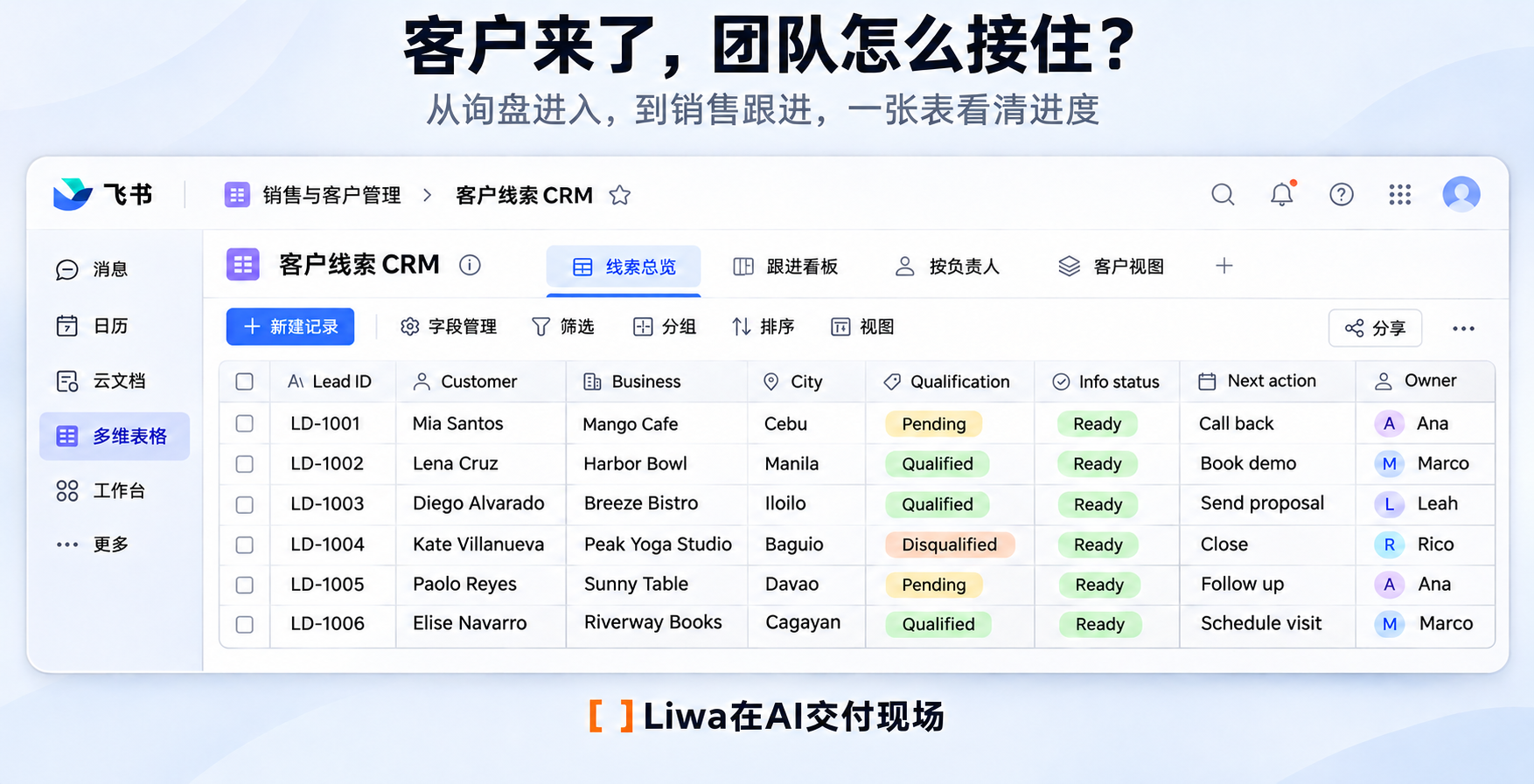
An illustration of the main lead table, using fictional customer details for privacy.
We first agreed with the business team what information should remain after a customer contact, what counts as a booked demo versus a completed demo, and who takes over next. Those decisions then became part of the workflow.
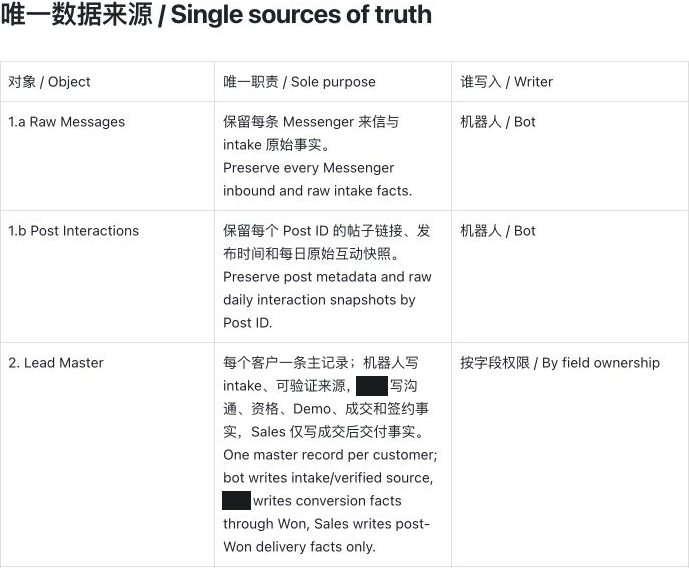
An excerpt from the handoff rules used at the time. Staff names are redacted.
People also needed to be able to correct the record. A detail learned on a call might differ from the customer's initial form response. Letting colleagues make that correction gives the next person more accurate information to work with.
The local team remained responsible for calls, qualification, demos, and closing sales. The system organized information for them and retained the records needed for subsequent handoffs.
Implementation, installation, and training after a sale also had handoff rules based on the same customer record. Colleagues taking over could refer to the restaurant details and requirements the customer had already explained.
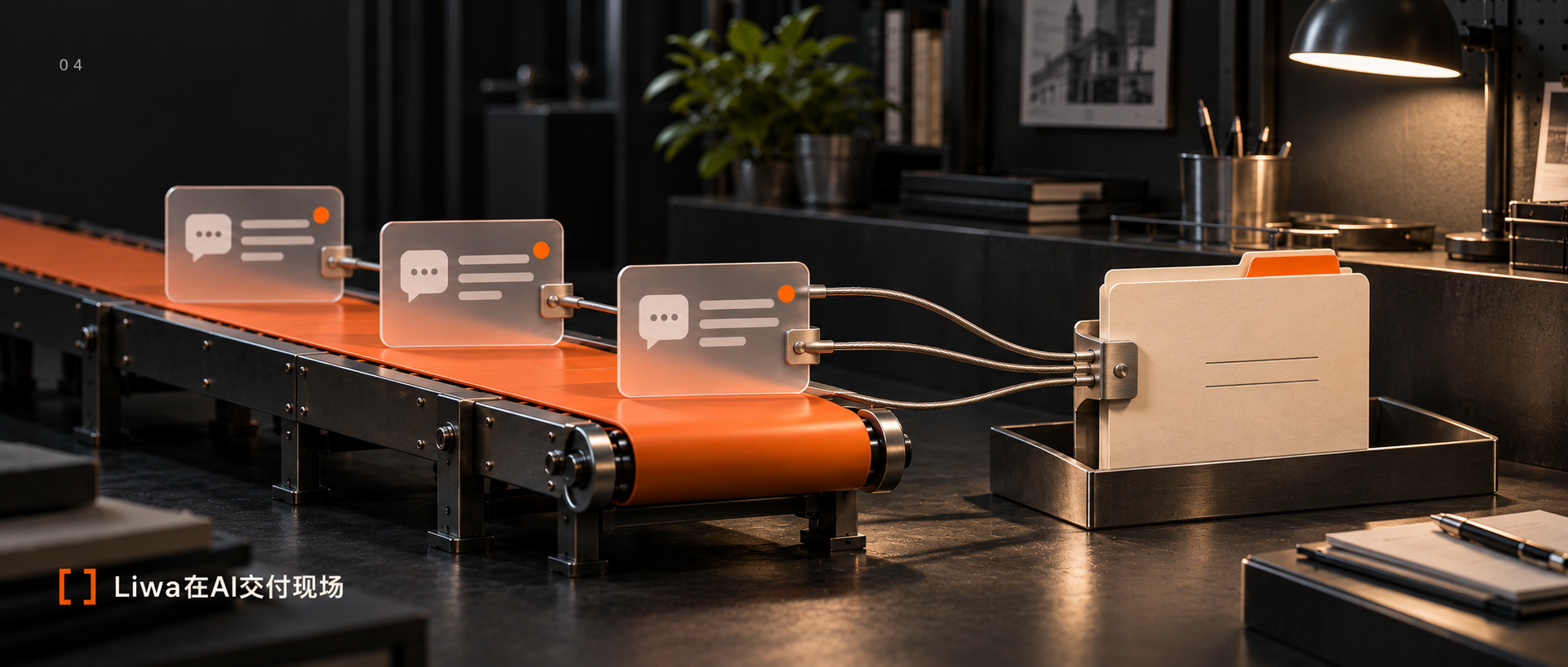
04 · The ads brought inquiries. Could the team follow through?
Did people actually leave their details after seeing the ads?
In a subsequent week of advertising, Meta's records showed 39 form leads, with average ad spend of approximately ₱206 per lead.
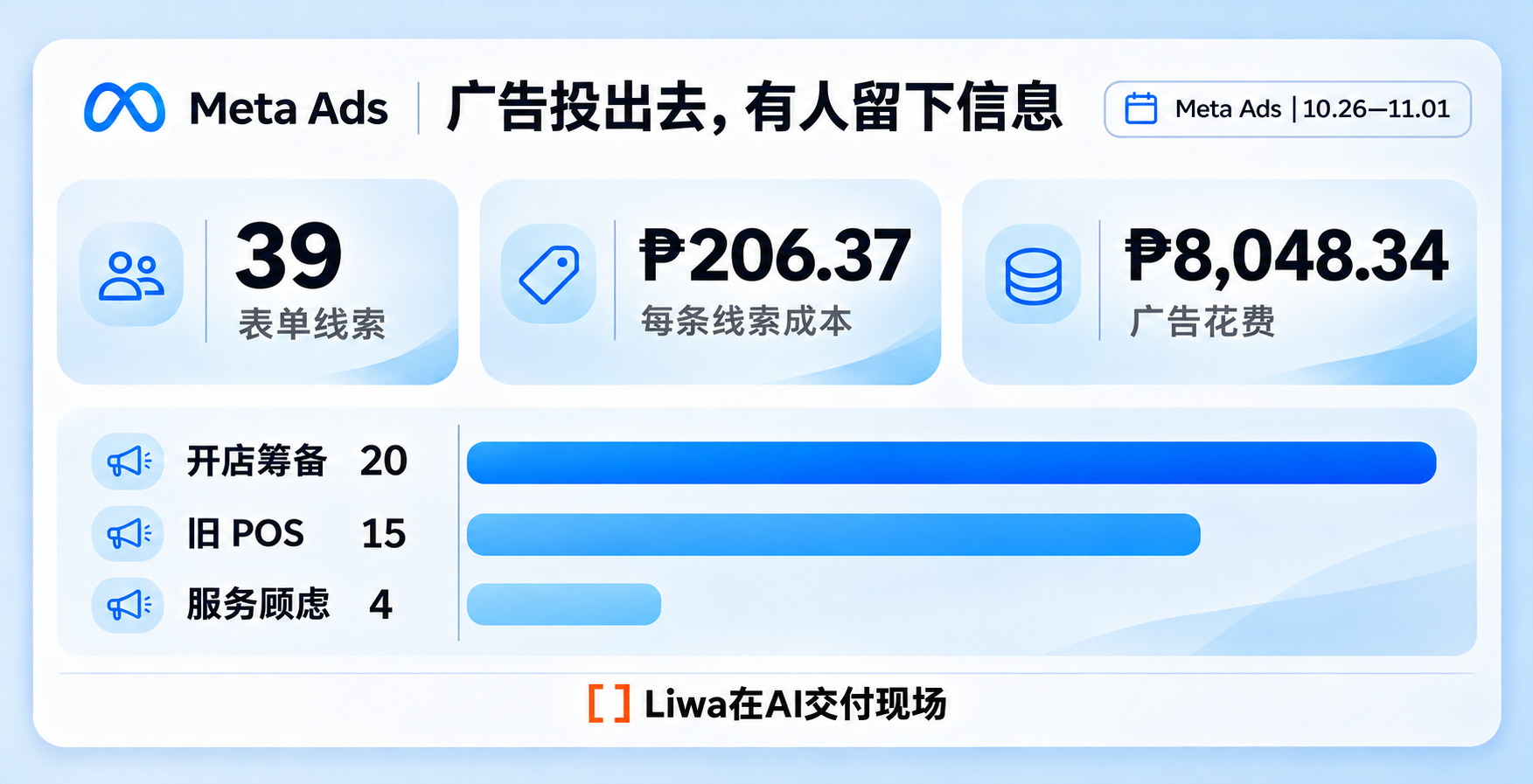
An illustration of the Meta ad data. The figures are based on the account records; ad names are general descriptions.
On the sales side, 14 records in the main customer table had a scheduled demo time, and five of those also had a demo completion time recorded.
Marketing and sales no longer had to rely entirely on asking around in the group to find out whether a customer had been contacted or a demo had been arranged. The information remained in a shared set of working records, ready for the team to continue the follow-up.
I will put together a redacted reference pack of the lead table and sales handoff rules used in this work.
To request the Inquiry Follow-up and Sales Handoff Table, message the Chinese keyword 「交接表」 to my WeChat Official Account, 力娃在AI交付现场.
If you run an e-commerce, export, or sales team and want to connect the steps in your own business workflow, contact me on WeChat: guliwa2026.
Liwa在AI交付现场 | Case 001